25/10/2026
Matthew 22:34-40
24 Oct 2026 16:59
Matthew 22:34-40
17 Oct 2026 16:59
Matthew 22:15-21
10 Oct 2026 16:59
Matthew 22:1-14
3 Oct 2026 16:59
Matthew 21:33-43
26 Sept 2026 16:59
Matthew 21:28-32
19 Sept 2026 11:19
Matthew 20:1-16
5 Sept 2026 22:22
Matthew 18:15-20
29 Aug 2026 16:59
Matthew 16:21-27
22 Aug 2026 16:59
Matthew 16:13-20
15 Aug 2026 16:59
Matthew 15:21-28
8 Aug 2026 16:59
Matthew 14:22-33
1 Aug 2026 16:59
Matthew 14:13-21


On this Fifth Sunday of Lent, we read a lengthy chapter from the Gospel of John to enter into the spirit of the approaching Holy Week.
The evangelist, St. John, takes us to Bethany, the home of his friends Lazarus, Mary and Martha. This was a place where Jesus often sought rest and comfort among those he loved—a haven where the Lord might have found relief amidst his ministry.
John chapter 11 recounts the moment when Jesus learned that his friend Lazarus was gravely ill. This episode serves as a prelude to the most significant event in Christ’s mission. Moved to tears, Jesus approaches Martha and Mary with the intention of raising Lazarus from the dead. His words and actions provoke a mixture of faith and doubt. Martha, one of the sisters, declares her belief that her brother will rise on the last day, yet there is an underlying uncertainty—her brother has died now, and she wonders whether Jesus can restore him to life in this world.
Jesus responds unequivocally: “I am the Resurrection and the Life; whoever believes in me will never die.” His teaching reminds us of the fundamental truth of Christian life. Jesus Christ wants to emphasise what we know and believe—that our faith leads us toward eternal life.
The entire concept of the coming feast and my belief in the Son of God is rooted in this confession: Christ is Risen. My life will end, but it leads to something greater. This is the powerful answer for all who call themselves Christians, including those who may doubt whether there is anything beyond this life. Jesus Christ, by raising Lazarus, demonstrates that he is going to Jerusalem to die and rise again, so that everyone who believes in him may have eternal life.
What was the defining feature of the first Christians in Jerusalem and elsewhere? These individuals were often poor, frightened for their lives, and persecuted, but they took pride in being disciples of Christ because of the promise of Resurrection in the Kingdom of God.
Their unwavering faith in the Resurrection made them obedient to God until the end—even to the point of death.
As we prepare for the celebration of the Paschal Mysteries, may we renew and affirm our certainty that Jesus came and dedicated himself so that we might live in him. Amen.
W tę piątą niedzielę Wielkiego Postu czytamy obszerny rozdział z Ewangelii św. Jana, aby wejść w ducha nadchodzącego Wielkiego Tygodnia.
Ewangelista św. Jan prowadzi nas do Betanii, domu przyjaciół Jezusa, Łazarza, Marii i Marty. To było miejsce, gdzie Jezus często szukał odpoczynku i pocieszenia wśród tych, których kochał — przystań, gdzie Pan mógł znaleźć ukojenie pośród swojej posługi.
Rozdział 11 Ewangelii Jana opowiada o chwili, gdy Jezus dowiedział się, że jego przyjaciel Łazarz jest ciężko chory. Ten epizod stanowi preludium do najważniejszego wydarzenia w misji Chrystusa. Poruszony do łez, Jezus zwraca się do Marty i Marii z zamiarem wskrzeszenia Łazarza. Jego słowa i czyny wywołują mieszankę wiary i zwątpienia. Marta, jedna z sióstr, wyznaje wiarę, że jej brat zmartwychwstanie w dniu ostatecznym, ale w jej słowach jest ukryta niepewność — jej brat umarł teraz i zastanawia się, czy Jezus może przywrócić go do życia już tu, na ziemi.
Jezus odpowiada jednoznacznie: „Ja jestem Zmartwychwstaniem i Życiem; kto wierzy we Mnie, nie umrze na wieki.” Jego nauka przypomina nam o fundamentalnej prawdzie życia chrześcijańskiego. Jezus Chrystus chce podkreślić to, co znamy i w co wierzymy — że nasza wiara prowadzi nas ku życiu wiecznemu.
Cała idea nadchodzącej uroczystości i moja wiara w Syna Bożego opiera się na tym wyznaniu: Chrystus zmartwychwstał. Moje życie dobiegnie końca, ale prowadzi do czegoś większego. To jest potężna odpowiedź dla wszystkich, dla mnie i dla tych, którzy nazywają siebie chrześcijanami, wątpiąc, czy istnieje coś, poza tym życiem. Jezus Chrystus, wskrzeszając Łazarza, pokazuje, że idzie do Jerozolimy, aby umrzeć i zmartwychwstać, aby każdy, kto w Niego wierzy, miał życie wieczne.
Co wyróżniało pierwszych chrześcijan w Jerozolimie i innych miejscach? Ci ludzie często byli ubodzy, żyli w strachu o swoje życie, byli prześladowani, lecz chlubili się byciem uczniami Chrystusa dzięki obietnicy Zmartwychwstania w Królestwie Bożym.
Ich niezachwiana wiara w Zmartwychwstanie sprawiła, że byli posłuszni Bogu do końca — nawet do śmierci.
Przygotowując się do świętowania Tajemnic Paschalnych, odnówmy naszą pewność, że Jezus przyszedł i ofiarował się, abyśmy mogli żyć w Nim. Amen.

In polish below... po polsku, poniżej...
As Jesus went along, he saw a man who had been blind from birth. His disciples asked him, ‘Rabbi, who sinned, this man or his parents, for him to have been born blind?’ ‘Neither he nor his parents sinned,’ Jesus answered ‘he was born blind so that the works of God might be displayed in him.
‘As long as the day lasts
I must carry out the work of the one who sent me;
the night will soon be here when no one can work.
As long as I am in the world
I am the light of the world.’
Having said this, he spat on the ground, made a paste with the spittle, put this over the eyes of the blind man, and said to him, ‘Go and wash in the Pool of Siloam’ (a name that means ‘sent’). So the blind man went off and washed himself, and came away with his sight restored.
His neighbours and people who earlier had seen him begging said, ‘Isn’t this the man who used to sit and beg?’ Some said, ‘Yes, it is the same one.’ Others said, ‘No, he only looks like him.’ The man himself said, ‘I am the man.’ So they said to him, ‘Then how do your eyes come to be open?’ ‘The man called Jesus’ he answered ‘made a paste, daubed my eyes with it and said to me, “Go and wash at Siloam”; so I went, and when I washed I could see.’ They asked, ‘Where is he?’ ‘I don’t know’ he answered.
They brought the man who had been blind to the Pharisees. It had been a sabbath day when Jesus made the paste and opened the man’s eyes, so when the Pharisees asked him how he had come to see, he said, ‘He put a paste on my eyes, and I washed, and I can see.’ Then some of the Pharisees said, ‘This man cannot be from God: he does not keep the sabbath.’ Others said, ‘How could a sinner produce signs like this?’ And there was disagreement among them. So they spoke to the blind man again, ‘What have you to say about him yourself, now that he has opened your eyes?’ ‘He is a prophet’ replied the man. However, the Jews would not believe that the man had been blind and had gained his sight, without first sending for his parents and asking them, ‘Is this man really your son who you say was born blind? If so, how is it that he is now able to see?’ His parents answered, ‘We know he is our son and we know he was born blind, but we do not know how it is that he can see now, or who opened his eyes. He is old enough: let him speak for himself.’ His parents spoke like this out of fear of the Jews, who had already agreed to expel from the synagogue anyone who should acknowledge Jesus as the Christ. This was why his parents said, ‘He is old enough; ask him.’
So the Jews again sent for the man and said to him, ‘Give glory to God! For our part, we know that this man is a sinner.’ The man answered, ‘I don’t know if he is a sinner; I only know that I was blind and now I can see.’ They said to him, ‘What did he do to you? How did he open your eyes?’ He replied, ‘I have told you once and you wouldn’t listen. Why do you want to hear it all again? Do you want to become his disciples too?’ At this they hurled abuse at him: ‘You can be his disciple,’ they said ‘we are disciples of Moses: we know that God spoke to Moses, but as for this man, we do not know where he comes from.’ The man replied, ‘Now here is an astonishing thing! He has opened my eyes, and you don’t know where he comes from! We know that God doesn’t listen to sinners, but God does listen to men who are devout and do his will. Ever since the world began it is unheard of for anyone to open the eyes of a man who was born blind; if this man were not from God, he couldn’t do a thing.’ ‘Are you trying to teach us,’ they replied ‘and you a sinner through and through, since you were born!’ And they drove him away.
Jesus heard they had driven him away, and when he found him he said to him, ‘Do you believe in the Son of Man?’ ‘Sir,’ the man replied ‘tell me who he is so that I may believe in him.’ Jesus said, ‘You are looking at him; he is speaking to you.’ The man said, ‘Lord, I believe’, and worshipped him.
Jesus said:
‘It is for judgement
that I have come into this world,
so that those without sight may see
and those with sight turn blind.’
Hearing this, some Pharisees who were present said to him, ‘We are not blind, surely?’ Jesus replied:
‘Blind? If you were,
you would not be guilty,
but since you say, “We see,”
your guilt remains.’
W tę Piątą Niedzielę Wielkiego Postu czytamy obszerny rozdział z Ewangelii św. Jana, aby wejść w ducha nadchodzącego Wielkiego Tygodnia.
Ewangelista św. Jan prowadzi nas do Betanii, domu przyjaciół Jezusa, Łazarza, Marii i Marty. To było miejsce, gdzie Jezus często szukał odpoczynku i pocieszenia wśród tych, których kochał — przystań, gdzie Pan mógł znaleźć ukojenie pośród swojej posługi.
Rozdział 11 Ewangelii Jana opowiada o chwili, gdy Jezus dowiedział się, że jego przyjaciel Łazarz jest ciężko chory. Ten epizod stanowi preludium do najważniejszego wydarzenia w misji Chrystusa. Poruszony do łez, Jezus zwraca się do Marty i Marii z zamiarem wskrzeszenia Łazarza. Jego słowa i czyny wywołują mieszankę wiary i zwątpienia. Marta, jedna z sióstr, wyznaje wiarę, że jej brat zmartwychwstanie w dniu ostatecznym, ale w jej słowach jest ukryta niepewność — jej brat umarł teraz i zastanawia się, czy Jezus może przywrócić go do życia już tu, na ziemi.
Jezus odpowiada jednoznacznie: „Ja jestem Zmartwychwstaniem i Życiem; kto wierzy we Mnie, nie umrze na wieki.” Jego nauka przypomina nam o fundamentalnej prawdzie życia chrześcijańskiego. Jezus Chrystus chce podkreślić to, co znamy i w co wierzymy — że nasza wiara prowadzi nas ku życiu wiecznemu.
Cała idea nadchodzącej uroczystości i moja wiara w Syna Bożego opiera się na tym wyznaniu: Chrystus zmartwychwstał. Moje życie dobiegnie końca, ale prowadzi do czegoś większego. To jest potężna odpowiedź dla wszystkich, dla mnie i dla tych, którzy nazywają siebie chrześcijanami, wątpiąc, czy istnieje coś, poza tym życiem. Jezus Chrystus, wskrzeszając Łazarza, pokazuje, że idzie do Jerozolimy, aby umrzeć i zmartwychwstać, aby każdy, kto w Niego wierzy, miał życie wieczne.
Co wyróżniało pierwszych chrześcijan w Jerozolimie i innych miejscach? Ci ludzie często byli ubodzy, żyli w strachu o swoje życie, byli prześladowani, lecz chlubili się byciem uczniami Chrystusa dzięki obietnicy Zmartwychwstania w Królestwie Bożym.
Ich niezachwiana wiara w Zmartwychwstanie sprawiła, że byli posłuszni Bogu do końca — nawet do śmierci.
Przygotowując się do świętowania Tajemnic Paschalnych, odnówmy naszą pewność, że Jezus przyszedł i ofiarował się, abyśmy mogli żyć w Nim. Amen.
Jezus, przechodząc, ujrzał pewnego człowieka, niewidomego od urodzenia. Uczniowie Jego zadali Mu pytanie: "Rabbi, kto zgrzeszył, że się urodził niewidomy – on czy jego rodzice?" Jezus odpowiedział: "Ani on nie zgrzeszył, ani rodzice jego, ale stało się tak, aby się na nim objawiły sprawy Boże. Trzeba nam pełnić dzieła Tego, który Mnie posłał, dopóki jest dzień. Nadchodzi noc, kiedy nikt nie będzie mógł działać. Jak długo jestem na świecie, jestem światłością świata". To powiedziawszy, splunął na ziemię, uczynił błoto ze śliny i nałożył je na oczy niewidomego, i rzekł do niego: "Idź, obmyj się w sadzawce Siloam" – co się tłumaczy: Posłany. On więc odszedł, obmył się i wrócił, widząc. A sąsiedzi i ci, którzy przedtem widywali go jako żebraka, mówili: "Czyż to nie jest ten, który siedzi i żebrze?" Jedni twierdzili: "Tak, to jest ten", a inni przeczyli: "Nie, jest tylko do tamtego podobny". On zaś mówił: "To ja jestem". Mówili więc do niego: "Jakżeż oczy ci się otworzyły?" On odpowiedział: "Człowiek, zwany Jezusem, uczynił błoto, pomazał moje oczy i rzekł do mnie: „Idź do sadzawki Siloam i obmyj się”. Poszedłem więc, obmyłem się i przejrzałem". Rzekli do niego: "Gdzież On jest?" Odrzekł: "Nie wiem". Zaprowadzili więc tego człowieka, niedawno jeszcze niewidomego, do faryzeuszów. A tego dnia, w którym Jezus uczynił błoto i otworzył mu oczy, był szabat. I znów faryzeusze pytali go o to, w jaki sposób przejrzał. Powiedział do nich: "Położył mi błoto na oczy, obmyłem się i widzę". Niektórzy więc spośród faryzeuszów rzekli: "Człowiek ten nie jest od Boga, bo nie zachowuje szabatu". Inni powiedzieli: "Ale w jaki sposób człowiek grzeszny może czynić takie znaki?" I powstał wśród nich rozłam. Ponownie więc zwrócili się do niewidomego: "A ty, co o Nim mówisz, jako że ci otworzył oczy?" Odpowiedział: "To prorok". Żydzi jednak nie uwierzyli, że był niewidomy i że przejrzał, aż przywołali rodziców tego, który przejrzał; i wypytywali ich, mówiąc: "Czy waszym synem jest ten, o którym twierdzicie, że się niewidomy urodził? W jaki to sposób teraz widzi?" Rodzice zaś jego tak odpowiedzieli: "Wiemy, że to jest nasz syn i że się urodził niewidomy. Nie wiemy, jak się to stało, że teraz widzi; nie wiemy także, kto mu otworzył oczy. Zapytajcie jego samego, ma swoje lata, będzie mówił sam za siebie". Tak powiedzieli jego rodzice, gdyż bali się Żydów. Żydzi bowiem już postanowili, że gdy ktoś uzna Jezusa za Mesjasza, zostanie wyłączony z synagogi. Oto dlaczego powiedzieli jego rodzice: "Ma swoje lata, jego samego zapytajcie". Znowu więc przywołali tego człowieka, który był niewidomy, i rzekli do niego: "Oddaj chwałę Bogu. My wiemy, że człowiek ten jest grzesznikiem". Na to odpowiedział: "Czy On jest grzesznikiem, tego nie wiem. Jedno wiem: byłem niewidomy, a teraz widzę". Rzekli więc do niego: "Cóż ci uczynił? W jaki sposób otworzył ci oczy?" Odpowiedział im: "Już wam powiedziałem, a wy nie słuchaliście. Po co znowu chcecie słuchać? Czy i wy chcecie zostać Jego uczniami?" Wówczas go obrzucili obelgami i rzekli: "To ty jesteś Jego uczniem, a my jesteśmy uczniami Mojżesza. My wiemy, że Bóg przemówił do Mojżesza. Co do Niego zaś, to nie wiemy, skąd pochodzi". Na to odpowiedział im ów człowiek: "W tym wszystkim dziwne jest to, że wy nie wiecie, skąd pochodzi, a mnie oczy otworzył. Wiemy, że Bóg nie wysłuchuje grzeszników, ale wysłuchuje każdego, kto jest czcicielem Boga i pełni Jego wolę. Od wieków nie słyszano, aby ktoś otworzył oczy niewidomemu od urodzenia. Gdyby ten człowiek nie był od Boga, nie mógłby nic uczynić". Rzekli mu w odpowiedzi: "Cały urodziłeś się w grzechach, a nas pouczasz?" I wyrzucili go precz. Jezus usłyszał, że wyrzucili go precz, i spotkawszy go, rzekł do niego: "Czy ty wierzysz w Syna Człowieczego?" On odpowiedział: "A któż to jest, Panie, abym w Niego uwierzył?" Rzekł do niego Jezus: "Jest nim Ten, którego widzisz i który mówi do ciebie". On zaś odpowiedział: "Wierzę, Panie!" i oddał Mu pokłon. A Jezus rzekł: "Przyszedłem na ten świat, aby przeprowadzić sąd, żeby ci, którzy nie widzą, przejrzeli, a ci, którzy widzą, stali się niewidomymi". Usłyszeli to niektórzy faryzeusze, którzy z Nim byli, i rzekli do Niego: "Czyż i my jesteśmy niewidomi?" Jezus powiedział do nich: "Gdybyście byli niewidomi, nie mielibyście grzechu, ale ponieważ mówicie: „Widzimy”, grzech wasz trwa nadal".
Dzisiaj, w Niedzielę Laetare, czytamy dość długi fragment Ewangelii według św. Jana, który opisuje uzdrowienie człowieka niewidomego od urodzenia. Ta historia ukazuje również zamieszanie oraz trudne decyzje, przed którymi stanęli uzdrowiony człowiek i jego rodzice. Bali się oni publicznie przyznać, że Jezus Chrystus jest Synem Bożym i Mesjaszem. Ich odpowiedzi wobec Żydów były ostrożne i pełne dyplomacji, mówiąc, że nie wiedzą, czy Jezus jest tym, na którego czekali faryzeusze.
Ci ludzie byli przestraszeni, ponieważ mogli zostać wykluczeni z synagogi. Strach często mieszka w ludzkim sercu. Jednak człowiek, który osobiście spotkał Chrystusa, zdobył się w końcu na odwagę i powiedział: „Wierzę w Syna Bożego.”
Ta historia uczy nas o związku między wiarą a dziękczynieniem. One należą do siebie nawzajem. Uzdrowiony człowiek miał możliwość powiedzieć jednocześnie: dziękuję za uzdrowienie oraz wierzę, że Ty jesteś Synem Bożym. Nasze doświadczenie wiary powinno prowadzić nas do wyznawania wiary w Boga i do dawania świadectwa o Jego wielkości oraz o Jego działaniu w naszym życiu.
Bardzo często mówimy automatycznie: „Dzięki Bogu” albo „Bogu niech będą dzięki.” Te słowa nie powinny być jedynie zwykłą reakcją słowną. Mogą one być prawdziwym wyznaniem wiary: „Tak, mój Panie i mój Boże, wszystko, co mam, pochodzi od Ciebie. Wierzę w to i uwielbiam Cię w moim sercu.”
Niech moja postawa dziękczynienia stanie się pięknym świadectwem, że wierzę, iż Syn Boży uczynił dla mnie wielkie rzeczy.
Amen.
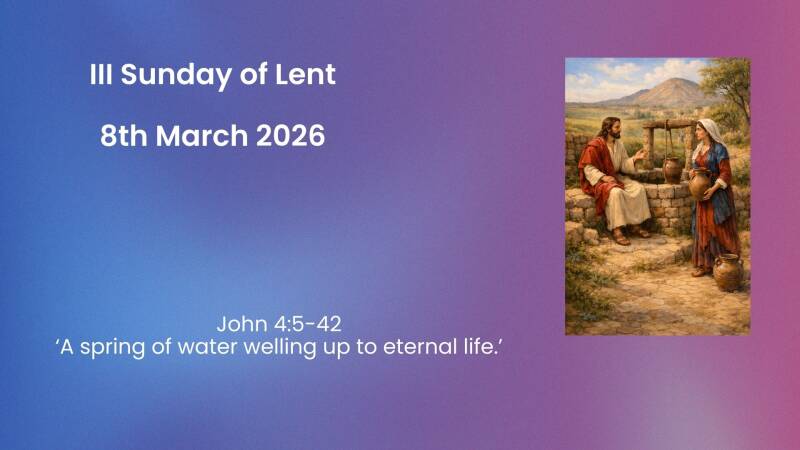
At that time: Jesus came to a town of Samaria called Sychar, near the field that Jacob had given to his son Joseph. Jacob’s well was there; so Jesus, wearied as he was from his journey, was sitting beside the well. It was about the sixth hour.
A woman from Samaria came to draw water. Jesus said to her, ‘Give me a drink.’ (For his disciples had gone away into the city to buy food.) The Samaritan woman said to him, ‘How is it that you, a Jew, ask for a drink from me, a woman of Samaria?’ (For Jews have no dealings with Samaritans.) Jesus answered her, ‘If you knew the gift of God, and who it is that is saying to you, “Give me a drink”, you would have asked him, and he would have given you living water.’ The woman said to him, ‘Sir, you have nothing to draw water with, and the well is deep. Where do you get that living water? Are you greater than our father Jacob? He gave us the well and drank from it himself, as did his sons and his livestock.’ Jesus said to her, ‘Everyone who drinks of this water will be thirsty again, but whoever drinks of the water that I will give him will never be thirsty again. The water that I will give him will become in him a spring of water welling up to eternal life.’ The woman said to him, ‘Sir, give me this water, so that I will not be thirsty or have to come here to draw water.’
Jesus said to her, ‘Go, call your husband, and come here.’ The woman answered him, ‘I have no husband.’ Jesus said to her, ‘You are right in saying, “I have no husband”; for you have had five husbands, and the one you now have is not your husband. What you have said is true.’ The woman said to him, ‘Sir, I perceive that you are a prophet. Our fathers worshipped on this mountain, but you say that in Jerusalem is the place where people ought to worship.’ Jesus said to her, ‘Woman, believe me, the hour is coming when neither on this mountain nor in Jerusalem will you worship the Father. You worship what you do not know; we worship what we know, for salvation is from the Jews. But the hour is coming, and is now here, when the true worshippers will worship the Father in spirit and truth, for the Father is seeking such people to worship him. God is spirit, and those who worship him must worship in spirit and truth.’ The woman said to him, ‘I know that Messiah is coming — he who is called Christ. When he comes, he will tell us all things.’ Jesus said to her, ‘I who speak to you am he.’
Just then his disciples came back. They marvelled that he was talking with a woman, but no one said, ‘What do you seek?’ or, ‘Why are you talking with her?’ So the woman left her water jar and went away into town and said to the people, ‘Come, see a man who told me all that I ever did. Can this be the Christ?’ They went out of the town and were coming to him.
Meanwhile the disciples were urging him, saying, ‘Rabbi, eat.’ But he said to them, ‘I have food to eat that you do not know about.’ So the disciples said to one another, ‘Has anyone brought him something to eat?’ Jesus said to them, ‘My food is to do the will of him who sent me and to accomplish his work. Do you not say, “There are yet four months, then comes the harvest”? Look, I tell you, lift up your eyes, and see that the fields are white for harvest. Already the one who reaps is receiving wages and gathering fruit for eternal life, so that sower and reaper may rejoice together. For here the saying holds true, “One sows and another reaps.” I sent you to reap that for which you did not labour. Others have laboured, and you have entered into their labour.’
Many Samaritans from that town believed in him because of the woman’s testimony, ‘He told me all that I ever did.’ So when the Samaritans came to him, they asked him to stay with them, and he stayed there two days. And many more believed because of his word. They said to the woman, ‘It is no longer because of what you said that we believe, for we have heard for ourselves, and we know that this is indeed the Saviour of the world.’
We are still experiencing the holy time – Lent. Every day we get closer to the deeper meaning of that period. Today, we read one of the longest chapters of the John’s Gospel. Jesus, together with his Apostles, arrives at the holy city, Jerusalem, to be crucified and killed and thus make the perfect sacrifice for the human redemption. During His journey, the Son of God met a lady who was a Samaritan. The dignity and nationality of the woman is very important for the reader, because the Jews hated them and considered to be the heretics who insisted that they belong to the Covenant with the One God. Talking with those people was unnatural and forbidden.
Christ again broke the rule and asked her for a water. The reaction of the woman was full of wonder; why do you ask me for water, as a Jew, you do not talk with us, the Samaritans.
The conversation of Jesus with the Samaritan woman, opened her heart for the faith. She recognized that Jesus is the Prophet. But the openness of her heart was done in truth and pain. Jesus Christ had asked her to bring her husband. She said: I do not have a husband. Then Jesus responded: well said, the man you are with, he is not your husband. The truth about her was well known to Christ. We can imagine the whole situation. She was ashamed, but this difficult conversation started a new way of life, the way of faith. Her conversion turned into joy, she went to the village to tell others: I have seen the Messiah.
And now, let’s focus on our life, because the whole Gospel concerns also us. Jesus Christ is coming to us, he wants to start a conversation with us and awake us, so that we could taste the real life. He knows that we need Him. If a man says: I can live without God, it means that his soul is still looking for the Lord. St. John Maria Vianney said: every man is looking for God, because he was created by Him, he is seeking His Creator. Jesus Christ wants to say: I am with you, whatever is happening, God is close. You have a lot of alternatives and choices which are attractive, but after a while it all leaves the emptiness.
Of course, we need stand in the truth before the Lord, as the woman did, without playing games, even if it is full of pain and discomfort. The truth makes us free, even though that honesty paralyzes many of us.
We may have seen how many people are unhappy, just wearing a mask of happiness. At the same time, they experience disasters, pain and fear. More and more people have depression, feel anxiety and suffer from different phobias. Young fall into alcoholism, drugs, they want to commit a suicide. We have seen it recently so often, when there was lack of hope, determination to fight for one’s own life. We are all called by Jesus who says: I know you, but you have to come to me, stand in truth, cry; God have mercy on me.
One of the greatest tragedies of people is cowardice. We pretend to be strong and brave, but on the other side we have no courage to admit our weaknesses, and it is a way that leads to depression, addiction and different complications, sometimes even self-destruction.
The woman of Samaria had the will to tell the truth, and she got to know the real Messiah. Jesus Christ is calling us: my beloved son and daughter, come to me, open your heart and I’ll liberate you from any fear and burden. Amen.
Jezus przybył do miasta samarytańskiego zwanego Sychar, w pobliżu pola, które dał Jakub synowi swemu, Józefowi. Było tam źródło Jakuba. Jezus zmęczony drogą siedział sobie przy źródle. Było to około szóstej godziny. Wówczas nadeszła kobieta z Samarii, aby zaczerpnąć wody. Jezus rzekł do niej: "Daj Mi pić!" Jego uczniowie bowiem udali się przedtem do miasta, by zakupić żywności. Na to rzekła do Niego Samarytanka: "Jakżeż Ty, będąc Żydem, prosisz mnie, Samarytankę, bym Ci dała się napić?" Żydzi bowiem i Samarytanie unikają się nawzajem. Jezus odpowiedział jej na to: "O, gdybyś znała dar Boży i wiedziała, kim jest Ten, kto ci mówi: „Daj Mi się napić”, to prosiłabyś Go, a dałby ci wody żywej". Powiedziała do Niego kobieta: "Panie, nie masz czerpaka, a studnia jest głęboka. Skądże więc weźmiesz wody żywej? Czy Ty jesteś większy od ojca naszego, Jakuba, który dał nam tę studnię, i on sam z niej pił, i jego synowie, i jego bydło?" W odpowiedzi na to rzekł do niej Jezus: "Każdy, kto pije tę wodę, znów będzie pragnął. Kto zaś będzie pił wodę, którą Ja mu dam, nie będzie pragnął na wieki, lecz woda, którą Ja mu dam, stanie się w nim źródłem tryskającym ku życiu wiecznemu". Rzekła do Niego kobieta: "Panie, daj mi tej wody, abym już nie pragnęła i nie przychodziła tu czerpać". A On jej odpowiedział: "Idź, zawołaj swego męża i wróć tutaj!" A kobieta odrzekła Mu na to: "Nie mam męża". Rzekł do niej Jezus: "Dobrze powiedziałaś: Nie mam męża. Miałaś bowiem pięciu mężów, a ten, którego masz teraz, nie jest twoim mężem. To powiedziałaś zgodnie z prawdą". Rzekła do Niego kobieta: "Panie, widzę, że jesteś prorokiem. Ojcowie nasi oddawali cześć Bogu na tej górze, a wy mówicie, że w Jerozolimie jest miejsce, gdzie należy czcić Boga". Odpowiedział jej Jezus: "Wierz Mi, kobieto, że nadchodzi godzina, kiedy ani na tej górze, ani w Jerozolimie nie będziecie czcili Ojca. Wy czcicie to, czego nie znacie, my czcimy to, co znamy, ponieważ zbawienie bierze początek od Żydów. Nadchodzi jednak godzina, nawet już jest, kiedy to prawdziwi czciciele będą oddawać cześć Ojcu w Duchu i prawdzie, a takich to czcicieli szuka Ojciec. Bóg jest duchem; trzeba więc, by czciciele Jego oddawali Mu cześć w Duchu i prawdzie". Rzekła do Niego kobieta: "Wiem, że przyjdzie Mesjasz, zwany Chrystusem. A kiedy On przyjdzie, objawi nam wszystko". Powiedział do niej Jezus: "Jestem nim Ja, który z tobą mówię". Na to przyszli Jego uczniowie i dziwili się, że rozmawiał z kobietą. Żaden jednak nie powiedział: "Czego od niej chcesz? – lub: Czemu z nią rozmawiasz?" Kobieta zaś zostawiła swój dzban i odeszła do miasta. I mówiła ludziom: "Pójdźcie, zobaczcie człowieka, który mi powiedział wszystko, co uczyniłam: Czyż On nie jest Mesjaszem?" Wyszli z miasta i szli do Niego. Tymczasem prosili Go uczniowie, mówiąc: "Rabbi, jedz!" On im rzekł: "Ja mam do jedzenia pokarm, o którym wy nie wiecie". Mówili więc uczniowie między sobą: "Czyż Mu kto przyniósł coś do zjedzenia?" Powiedział im Jezus: "Moim pokarmem jest wypełnić wolę Tego, który Mnie posłał, i wykonać Jego dzieło. Czyż nie mówicie: „Jeszcze cztery miesiące, a nadejdą żniwa?” Oto powiadam wam: Podnieście oczy i popatrzcie na pola, jak się bielą na żniwo. Żniwiarz otrzymuje już zapłatę i zbiera plon na życie wieczne, tak iż siewca cieszy się razem ze żniwiarzem. Tu bowiem okazuje się prawdziwym powiedzenie: Jeden sieje, a drugi zbiera. Ja was wysłałem, abyście żęli to, nad czym wy się nie natrudziliście. Inni się natrudzili, a wy w ich trud weszliście". Wielu Samarytan z owego miasta zaczęło w Niego wierzyć dzięki słowu kobiety świadczącej: "Powiedział mi wszystko, co uczyniłam". Kiedy więc Samarytanie przybyli do Niego, prosili Go, aby u nich został. Pozostał tam zatem dwa dni. I o wiele więcej ich uwierzyło dzięki Jego słowu, a do tej kobiety mówili: "Wierzymy już nie dzięki twemu opowiadaniu, usłyszeliśmy bowiem na własne uszy i wiemy, że On prawdziwie jest Zbawicielem świata".
Wciąż przeżywamy święty czas, jakim jest Wielki Post, każdego dnia wchodzimy w głębszy sens tego okresu Kościoła. Dziś czytamy jeden z najdłuższych rozdziałów Ewangelii Jana. Jezus wraz ze swoimi Apostołami udaje się do świętego miasta Jerozolimy, aby zostać ukrzyżowanym i zabitym jako doskonała ofiara odkupienia człowieka. Podczas swojej podróży Syn Boży spotyka kobietę, która była Samarytanką. Godność i narodowość kobiety mają dla czytelnika duże znaczenie, ponieważ Żydzi ich nienawidzili, uważając ich za heretyków, którzy upierali się, że należą do Przymierza z Jedynym Bogiem. Rozmowa z tymi ludźmi była czymś nienaturalnym i zabronionym.
Chrystus ponownie łamie regułę i prosi o wodę. Reakcja kobiety była pełna podziwu; dlaczego prosisz mnie o wodę jako Żyd, przecież nie rozmawiacie z nami, Samarytanami.
Ten dialog zapoczątkował coś więcej, rozmowę Jezusa z Samarytanką otworzył jej serce na wiarę. Rozpoznała, że Jezus jest Mesjaszem, który mógł przyjść na świat. Otwartość jej serca wyrażała się w prawdzie i bólu. Jezus Chrystus poprosił, przyprowadź męża. Powiedziała, że nie mam męża, a on odpowiedział, dobrze powiedziane, mężczyzna, z którym jesteś, nie jest twoim mężem. Prawda o niej była dobrze znana Chrystusowi. Możemy sobie wyobrazić jej sytuację, wstydziła się, ale ta trudna rozmowa zapoczątkowała nową drogę życia, drogę wiary. Jej nawrócenie stało się radością, poszła do wioski, aby powiedzieć: widziałam Mesjasza.
A teraz skupmy się na naszym życiu, bo cała Ewangelia dotyczy nas. Jezus Chrystus przychodzi do nas, chce rozpocząć ze mną rozmowę, obudzić mnie dla prawdziwego smaku życia. On wie, że potrzebujemy Go, aby żyć pełnią życia. Jeśli człowiek mówi; mogę żyć bez Boga, mimo wszystko jego dusza będzie szukać Pana. Św. Jan Maria Vianney powiedział, że każdy człowiek szuka Boga, bo został przez Niego stworzony, szuka swojego Stwórcy. Jezus Chrystus chce powiedzieć: jestem z wami, cokolwiek się dzieje, Bóg jest blisko. Masz wiele alternatyw i wyborów, które są atrakcyjne, ale po pewnym czasie wszystko pozostawia pustkę.
Oczywiście musimy stanąć po stronie prawdy przed Panem, tak jak zrobiła to ta kobieta, udawania, nawet jeśli jest to pełne bólu i dyskomfortu. Prawda czyni nas wolnymi. Ale ta umiejętność uczciwości wobec Boga paraliżuje wielu, trwając w smutku, bezbronności i słabości.
Być może widzieliśmy, jak wielu ludzi jest nieszczęśliwych w środku, tworząc maskę szczęścia ma zewnątrz. Jednocześnie doświadczają wielu dramatów, bólu i strachu. Coraz więcej osób cierpi na depresję, lęki i fobie. Młodzi popadają w alkoholizm, narkotyki, chcą popełnić samobójstwo. Widzieliśmy to ostatnio tak często, kiedy zabrakło nadziei, determinacji do walki o własne życie, ludzie odbierając sobie życie, pociągając za sobą wiele cierpienia. Tych ludzi i nas wzywa Jezus, który mówi; znam was, przyjdźcie do mnie, stojąc w prawdzie, wołając; o Boże zmiłuj się nade mną.
Jedną z największych tragedii człowieka jest tchórzostwo, gramy silnych i odważnych ludzi, ale z drugiej strony nie mamy odwagi przyznać się do swojej słabości, a to jest droga do depresji, uzależnienia i różnych komplikacji, aż do samozniszczenia.
Kobieta z Samarii miała wolę mówienia prawdy i poznała prawdziwego Mesjasza. Jezus Chrystus wzywa nas; Mój umiłowany synu i córko, przyjdź do mnie, otwórz swoje serce, a uwolnię cię od wszelkiego strachu i ciężaru. Amen.

Jesus took with him Peter and James and his brother John and led them up a high mountain where they could be alone. There in their presence he was transfigured: his face shone like the sun and his clothes became as white as the light. Suddenly Moses and Elijah appeared to them; they were talking with him. Then Peter spoke to Jesus. ‘Lord,’ he said ‘it is wonderful for us to be here; if you wish, I will make three tents here, one for you, one for Moses and one for Elijah.’ He was still speaking when suddenly a bright cloud covered them with shadow, and from the cloud there came a voice which said, ‘This is my Son, the Beloved; he enjoys my favour. Listen to him.’ When they heard this the disciples fell on their faces, overcome with fear. But Jesus came up and touched them. ‘Stand up,’ he said ‘do not be afraid.’ And when they raised their eyes they saw no one but only Jesus.
As they came down from the mountain Jesus gave them this order, ‘Tell no one about the vision until the Son of Man has risen from the dead.’
On the Second Sunday of Lent, we accompany Jesus and the Apostles to the Mount of Transfiguration and become witnesses to an extraordinary event. There, Jesus meets Moses and Elijah and is illuminated by a radiant light from above. The voice of the Father affirms that Jesus is the Son of God, and the Apostles are called to listen to him.
Today's readings emphasise the authority figures within Judaism, to whom the Apostles are connected. The First Reading tells of Abraham, the father of the generations of Israel. In the Gospel, Peter, John, and James see Moses and the prophet Elijah—figures who are revered above all others in the Old Testament. Abraham left his homeland to claim the land of Palestine for his descendants, from whom the Jewish people originate. Moses delivered God's Law, the Decalogue, and led the Israelites from Egypt to the Promised Land. Elijah, the prophet, fought courageously for his nation’s faithfulness to God. For Jews, these individuals are of utmost importance.
The situations described in the First Reading and the Gospel present us, along with the Apostles, with these important figures. They show that, while Abraham, Moses, and Elijah are vital to the promises of the Old Testament, something new is now beginning. Jesus Christ stands at the centre of God’s revelation. Abraham, Moses, and Elijah lived centuries before Jesus, preparing the way for him. Jesus comes to fulfil God’s promise and to redeem humanity from death.
Our faith is centred on Christ; in the person of Jesus Christ, we find our hope, salvation, and help. Saint Paul the Apostle, who never met Christ during his earthly life, writes that our salvation is found only in Jesus. Whoever confesses that Christ is the Redeemer will receive the gift of salvation.
This Sunday reminds us of a truth we know well, but Lent invites us to turn our gaze once more to this reality and to repeat, again: Jesus Christ, Son of God, you are my Redeemer. Amen.
Jezus wziął z sobą Piotra, Jakuba oraz brata jego, Jana, i zaprowadził ich na górę wysoką, osobno. Tam przemienił się wobec nich: twarz Jego zajaśniała jak słońce, odzienie zaś stało się białe jak światło. A oto ukazali się im Mojżesz i Eliasz, rozmawiający z Nim. Wtedy Piotr rzekł do Jezusa: "Panie, dobrze, że tu jesteśmy; jeśli chcesz, postawię tu trzy namioty: jeden dla Ciebie, jeden dla Mojżesza i jeden dla Eliasza". Gdy on jeszcze mówił, oto obłok świetlany osłonił ich, a z obłoku odezwał się głos: "To jest mój Syn umiłowany, w którym mam upodobanie, Jego słuchajcie!" Uczniowie, słysząc to, upadli na twarz i bardzo się zlękli. A Jezus zbliżył się do nich, dotknął ich i rzekł: "Wstańcie, nie lękajcie się!» Gdy podnieśli oczy, nikogo nie widzieli, tylko samego Jezusa. A gdy schodzili z góry, Jezus przykazał im, mówiąc: «Nie opowiadajcie nikomu o tym widzeniu, aż Syn Człowieczy zmartwychwstanie".
W II Niedzielę Wielkiego Postu towarzyszymy Jezusowi i Apostołom na Górze Przemienienia, stając się świadkami niezwykłego wydarzenia. Tam Jezus spotyka Mojżesza i Eliasza, a Jego oblicze rozświetla promienista światłość z nieba. Głos Ojca potwierdza, że Jezus jest Synem Bożym, a Apostołowie zostają wezwani, by Go słuchać.
Dzisiejsze czytania podkreślają autorytety judaizmu, z którymi Apostołowie są powiązani. Pierwsze czytanie mówi o Abrahamie, ojcu pokoleń Izraela. W Ewangelii Piotr, Jan i Jakub widzą Mojżesza oraz proroka Eliasza—postacie, które są najbardziej czczone w Starym Testamencie. Abraham opuścił swoją ojczyznę, aby zdobyć ziemię Palestyny dla swoich potomków, z których wywodzi się naród żydowski. Mojżesz przekazał Boże Prawo, Dekalog, oraz wyprowadził Izraelitów z Egiptu do Ziemi Obiecanej. Eliasz, prorok, odważnie walczył o wierność narodu Bogu. Dla Żydów te osoby są najwyższej wagi.
Sytuacje opisane w Pierwszym Czytaniu i Ewangelii ukazują nam, istotę tych postaci. Pokazują, że choć Abraham, Mojżesz i Eliasz są kluczowi dla obietnic Starego Testamentu, to teraz rozpoczyna się coś nowego. Jezus Chrystus znajduje się w centrum Bożego objawienia. Abraham, Mojżesz i Eliasz żyli wieki przed Jezusem, przygotowując Mu drogę. Jezus przychodzi, aby wypełnić Bożą obietnicę i odkupić ludzkość od śmierci.
Nasza wiara jest skoncentrowana na Chrystusie; w osobie Jezusa Chrystusa odnajdujemy nadzieję, zbawienie i pomoc. Święty Paweł Apostoł, który nie spotkał Chrystusa za Jego ziemskiego życia, pisze, że zbawienie można znaleźć tylko w Jezusie. Kto wyzna, że Chrystus jest Zbawicielem, otrzyma dar zbawienia.
Ta niedziela przypomina nam prawdę, którą dobrze znamy, a Wielki Post zachęca, by raz jeszcze skierować wzrok na tę rzeczywistość i powtórzyć: Jezu Chryste, Synu Boży, Ty jesteś moim Odkupicielem. Amen.

Jesus was led by the Spirit out into the wilderness to be tempted by the devil. He fasted for forty days and forty nights, after which he was very hungry, and the tempter came and said to him, ‘If you are the Son of God, tell these stones to turn into loaves.’ But he replied, ‘Scripture says:
Man does not live on bread alone
but on every word that comes from the mouth of God.’
The devil then took him to the holy city and made him stand on the parapet of the Temple. ‘If you are the Son of God’ he said ‘throw yourself down; for scripture says:
He will put you in his angels’ charge,
and they will support you on their hands
in case you hurt your foot against a stone.’
Jesus said to him, ‘Scripture also says:
You must not put the Lord your God to the test.’
Next, taking him to a very high mountain, the devil showed him all the kingdoms of the world and their splendour. ‘I will give you all these’ he said, ‘if you fall at my feet and worship me.’ Then Jesus replied, ‘Be off, Satan! For scripture says:
You must worship the Lord your God,
and serve him alone.’
Then the devil left him, and angels appeared and looked after him.
Last Wednesday, we began our journey through Lent, a period of 40 days devoted to preparing for the glory of redemption through the Passion and Resurrection of Jesus Christ.
On this First Sunday of Lent, the Church invites us into the desert with Jesus, who faced temptation by the devil. The central theme of today's readings is the choice to listen to God. Adam and Eve were confronted with the decision of whom to trust and obey—whether to follow God's voice or not. We know how their story ended, and its consequences continue to affect us today. Thankfully, through the blood of Jesus Christ, we have been redeemed from the effects of original sin.
A similar situation unfolds in the desert, as described in the Gospel of Matthew. Jesus faces temptations related to bread, wealth, and safety. While these temptations focus on hunger, possession, and security, their deeper meaning lies in the challenge of remaining faithful to God.
The devil's words could have distracted Jesus from listening to God the Father, much like what happened in the Book of Genesis.
Jesus’ time in the wilderness was a test of his commitment to God's voice. Though his spirit remained steadfast, as a human being he experienced genuine trial and temptation.
The Lord reveals one of the many meanings of Lent. While it is a time for conversion, almsgiving, and fasting, it is also a special opportunity to listen to God's voice—to hear his gentle call: “Come with me, listen to me.”
God and the Church have prepared daily readings that are especially meaningful during Lent. This season invites us to immerse ourselves more deeply in the Word of God.
These forty days offer a beautiful lesson on becoming attentive listeners and faithful students of God's Word, as presented in the liturgy.
May this Lent be a fruitful and blessed time for us all, as we choose to listen to God every day. Amen.
Duch wyprowadził Jezusa na pustynię, aby był kuszony przez diabła. A gdy przepościł czterdzieści dni i czterdzieści nocy, odczuł w końcu głód. Wtedy przystąpił kusiciel i rzekł do Niego: „Jeśli jesteś Synem Bożym, powiedz, żeby te kamienie stały się chlebem”. Lecz On mu odparł: „Napisane jest: "Nie samym chlebem żyje człowiek, lecz każdym słowem, które pochodzi z ust Bożych”. Wtedy wziął Go diabeł do Miasta Świętego, postawił na narożniku świątyni i rzekł Mu: „Jeśli jesteś Synem Bożym, rzuć się w dół, jest przecież napisane: »Aniołom swoim rozkaże o Tobie, a na rękach nosić Cię będą, byś przypadkiem nie uraził swej nogi o kamień”. Odrzekł mu Jezus: „Ale jest napisane także: "Nie będziesz wystawiał na próbę Pana, Boga swego”. Jeszcze raz wziął Go diabeł na bardzo wysoką górę, pokazał Mu wszystkie królestwa świata oraz ich przepych i rzekł do Niego: „Dam Ci to wszystko, jeśli upadniesz i oddasz mi pokłon”. Na to odrzekł mu Jezus: „Idź precz, szatanie! Jest bowiem napisane: "Panu, Bogu swemu, będziesz oddawał pokłon i Jemu samemu służyć będziesz”. Wtedy opuścił Go diabeł, a oto aniołowie przystąpili i usługiwali Mu.
W minioną środę rozpoczęliśmy naszą wielkopostną drogę, czyli czterdzieści dni poświęconych przygotowaniu do chwały odkupienia przez Mękę i Zmartwychwstanie Jezusa Chrystusa.
W tą Pierwszą Niedzielę Wielkiego Postu Kościół zaprasza nas do wejścia na pustynię razem z Jezusem, który stawił czoła pokusom ze strony diabła. Głównym motywem dzisiejszych czytań jest wybór, czy słuchać Boga. Adam i Ewa stanęli przed decyzją, komu zaufać i kogo posłuchać — czy głosu Boga, czy nie. Znamy zakończenie ich historii, a jej konsekwencje odczuwamy do dziś. Na szczęście, dzięki Krwi Jezusa Chrystusa zostaliśmy odkupieni z skutków grzechu pierworodnego.
Podobna sytuacja rozgrywa się na pustyni, jak opisuje Ewangelia według św. Mateusza. Jezus doświadcza pokus dotyczących chleba, bogactwa i bezpieczeństwa. Choć pokusy te dotyczą głodu, posiadania i ochrony, ich głębszy sens kryje się w wyzwaniu pozostania wiernym Bogu.
Słowa diabła mogłyby odciągnąć Jezusa od słuchania Boga Ojca, podobnie jak miało to miejsce w Księdze Rodzaju.
Czas Jezusa na pustyni był próbą Jego wierności głosowi Boga. Jego duch pozostał niezłomny, ale jako człowiek doświadczał prawdziwych trudności i pokus.
Pan objawia jedno z wielu znaczeń Wielkiego Postu. Choć jest to czas nawrócenia, jałmużny i postu, jest również szczególną okazją, by wsłuchać się w głos Boga — usłyszeć Jego łagodne wezwanie: „Pójdź za mną, słuchaj mnie.”
Bóg i Kościół przygotowali codzienne czytania, które są szczególnie ważne podczas Wielkiego Postu. Ten czas zachęca nas do głębszego zanurzenia się w Słowie Bożym.
Te czterdzieści dni to piękna lekcja stawania się uważnymi słuchaczami i wiernymi uczniami Słowa Bożego, które otrzymujemy w liturgii.
Niech ten Wielki Post będzie dla nas wszystkich owocnym i błogosławionym czasem, w którym każdego dnia wybieramy słuchanie Boga. Amen.
About me
My name is Father Piotr Gasiorek, a
catholic priest working in Gibraltar
since 2015. Originally I come from
Poland. In 2022 I was naturalised as
Gibraltarian, and 2023 been
incardinated to The Diocese of
Gibraltar

